
Heat pump noise: measurements and assessment
Checked
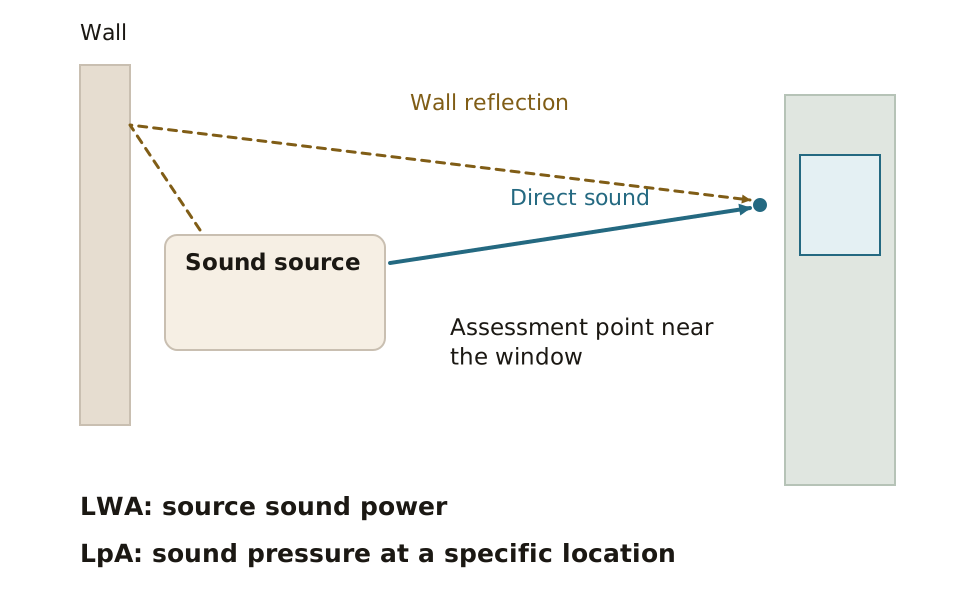
A catalogue noise figure is not automatically the noise at a neighbour's window. Distinguish sound power at the source, sound pressure at a stated distance and the assessed value at a protected location.
Compliance needs the actual site, operating mode and an appropriate acoustic assessment.
Three different measures
LWA is sound power under specified conditions. It does not automatically include the distance to a neighbour. LpA is sound pressure at a place and depends on distance, operating mode and surroundings.
The assessed value concerns the protected place and time with the applicable corrections. Comparing these three quantities as if they were interchangeable gives misleading results.
Quiet and night modes
Quiet operation may reduce fan speed and available heat output. Ask for noise and thermal output in the mode needed on a cold night. A marketing minimum may not apply at maximum heating output.
Place, time and corrections
The annex to Slovak regulation 549/2007 distinguishes location category, source and time. Its category II example for other sources is 50/50/45 dB for day/evening/night. This is not a general limit on the heat pump's sound power.
The protected receiver, character of the sound and applicable corrections matter. A +5 dB correction may apply to certain sound characteristics; do not apply it automatically to every heat pump. Have the actual case assessed by a specialist.
Reflections and vibration
Walls, corners, gaps between buildings and structural vibration change the result. Distance alone does not represent all these effects. An enclosure can also restrict airflow and servicing.
Ask the supplier for
- Exact model, mode and acoustic quantity.
- Measurement conditions, standard and distance for sound pressure.
- Assessment at windows and other protected places, including at night.
- Vibration treatment, reflections and heat output in quiet mode.
Sources
We are an independent information site. We do not sell or install equipment. These dated sources do not replace a design for your home. Source links are not affiliate links.
- SIEA: choosing a heat pump (Slovak)
- Slovak regulation 549/2007, annex — Source version effective from 1 July 2009; categories and corrections need site-specific assessment.